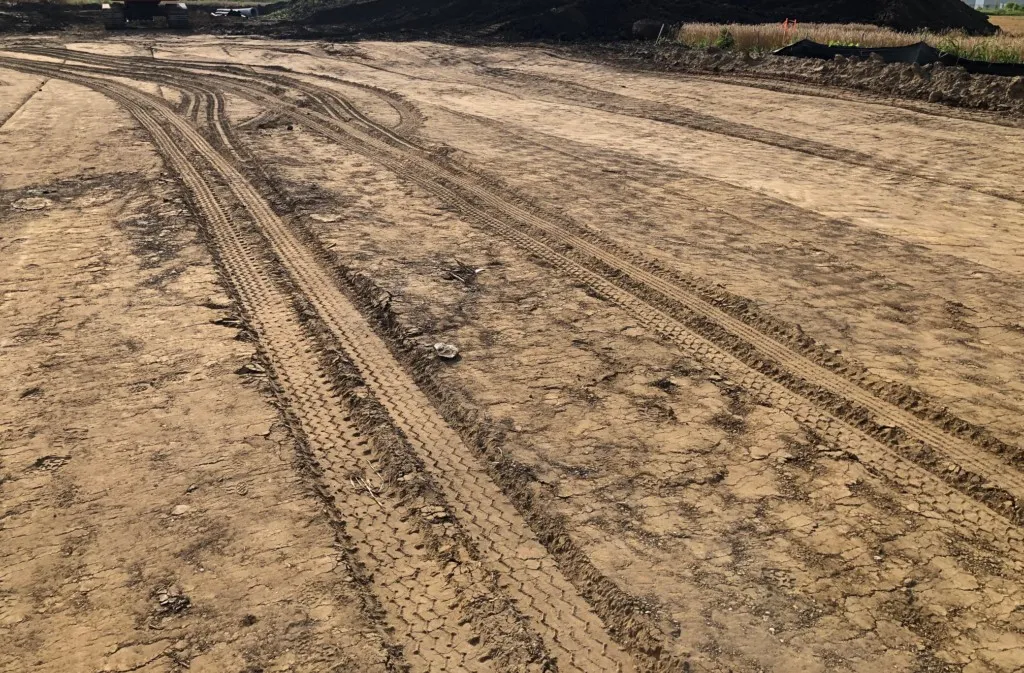
A pad or roadway subgrade may pass proof-roll one day and start pumping under the roller the next. When that happens, base installation stops and the schedule usually stalls with it. Crews often try adding rock or rolling the area again, but the same soft zone returns after the next rain or equipment pass.
A failed proof-roll does not identify the fix. It only confirms the soil cannot currently support load. The key is determining whether the issue is moisture, compaction, or unsuitable soil. Once that is clear, the decision usually comes down to re-compaction, stabilization, or undercut.
What a Failed Proof-Roll Usually Means
Proof-rolling checks how the subgrade behaves under real load. A loaded truck or heavy roller moves across the prepared surface while operators watch for deflection.
When the soil starts moving under the roller, the subgrade is not supporting the weight above it. That movement usually appears as pumping clay, rippling soil, or visible deflection in the tire path.
Several conditions typically cause this:
Clay soils holding too much moisture
Soil that was placed in lifts that were too thick
Compaction that never reached density
Organic or unstable soil layers beneath the working surface
Crews often notice the problem before testing is even finished. The roller may leave visible waves in the surface, or mud may push up along the tires. Either way, the soil is showing that it does not have enough strength to carry load.
Why the Most Common Fix (More Rock or More Rolling) Usually Fails
The first response on many sites is to add stone or keep rolling the area. Both approaches attempt to correct the surface instead of fixing the subgrade.
If the soil below is weak, additional rock simply pushes downward. The aggregate sinks into the clay and mixes with wet soil. Once that happens, the base layer loses its structure.
Repeated rolling has a similar result. The roller compresses the soft soil temporarily, but the weakness remains underneath. When moisture returns or equipment traffic continues, the same area begins moving again.
A few field indicators usually confirm this pattern:
Rock disappearing into the subgrade
Clay pumping through aggregate
Tire ruts returning after rainfall
At that point the issue is no longer the base layer. The soil underneath must be corrected before any surface material will perform correctly.
The Three Structural Fixes After Proof-Roll Failure
Once the cause of instability is understood, the repair usually falls into one of three categories: re-compaction, stabilization, or undercut. The choice depends on how the soil behaves when it is reworked.
1. Re-Compaction (When the Soil Is Still Usable)
Sometimes the soil itself is acceptable but was compacted under the wrong moisture conditions. Clay placed too wet often feels stable at first but loses strength under load.
In those cases the correction is straightforward. The surface is scarified, moisture is allowed to escape, and the soil is reworked until it reaches the proper moisture range. The lift is then compacted again.
Compaction testing typically confirms the soil has reached the required density, often referenced against Modified Proctor standards.
If the instability was limited to the upper lift and the soil firms as it dries, re-compaction can restore the subgrade without additional material.
2. Stabilization (When Soil Is Weak but Salvageable)
Some soils remain weak even when moisture is controlled. High-plasticity clay is a common example. It may compact initially but quickly loses strength when moisture increases.
In those cases the soil can often be improved instead of removed. Stabilization changes how the clay behaves by reducing plasticity and increasing strength.
Typical stabilization methods include lime or cement treatment. The additive is mixed into the soil and compacted after a short reaction period.
Stabilization works well when instability is widespread across clay soils and simple drying or recompaction will not hold.
3. Undercut (When Soil Cannot Be Corrected)
Some soils cannot be improved enough to support load. Saturated clay layers, organic soils, or deeply unstable material often fall into this category.
When the soil continues to deflect after drying and compaction attempts, the unstable material must be removed. This process is called undercut.
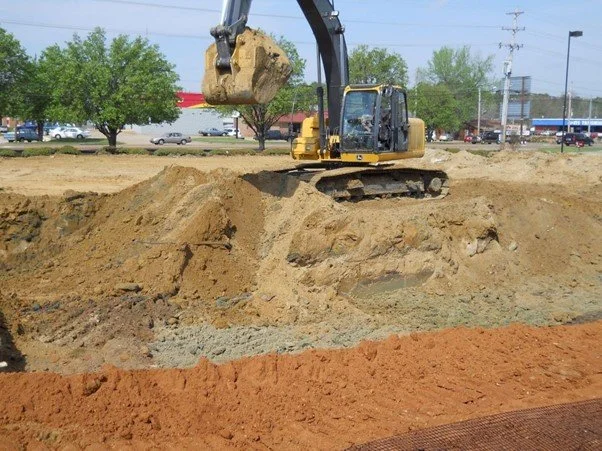
Crews excavate the weak soil until a stable layer is reached. The excavation is then rebuilt using suitable fill placed in controlled lifts.
Geotextile separation is sometimes installed at the base of the excavation to prevent mixing between new material and the remaining soil.
Undercut is the most involved correction, but it eliminates the unstable layer that caused the failure.
Kansas City Clay Soils Make Proof-Roll Failures More Common
Much of the Kansas City metro sits on clay-heavy soils that react quickly to moisture changes. When dry, these soils can compact well and support construction traffic. After rain, their strength can drop rapidly.
This is why a subgrade may pass proof-roll during dry weather and begin pumping after rainfall. The clay absorbs water and loses shear strength.
Crews working in the region often recognize this behavior quickly. Clay sticking to tires, wet zones that remain soft, and pumping along low areas are common signs.
Drainage plays a role as well. If grading does not move water away from the subgrade, moisture can remain trapped in the clay and weaken the soil repeatedly.
Decision Guide: Re-Compaction vs Stabilization vs Undercut
The correct repair depends on what the soil does when it is reworked.
Field Condition | Likely Fix | Reason |
Soil slightly wet but structurally sound | Re-compaction | Adjust moisture and restore density |
Clay repeatedly soft after rain | Stabilization | Treatment improves strength and reduces plasticity |
Deep pumping or organic material present | Undercut | Unstable soil must be removed |
If the soil firms noticeably as it dries, recompaction may solve the issue. If instability spreads across large clay areas, stabilization is often the better approach. When pumping continues regardless of drying or compaction effort, undercut usually becomes necessary.
What a Correct Repair Sequence Looks Like
Correct sequencing matters when repairing a failed proof-roll area. Placing base material before fixing the subgrade only hides the problem.
A stable repair typically follows this order:
Stop base placement once pumping or deflection appears.
Identify whether moisture, compaction, or soil type is responsible.
Correct the subgrade using re-compaction, stabilization, or undercut.
Restore proper grading so water drains away from the work area.
Proof-roll the repaired section again before installing base.
Once the subgrade holds firm under the roller, the base layer can be placed without risk of sinking or contamination.
When a Failed Proof-Roll Means It’s Time to Call a Contractor
Small soft spots can sometimes be corrected during normal grading work. Larger failures usually require excavation, stabilization, or drainage changes.
Contractor involvement becomes necessary when:
Pumping extends across multiple areas of the site
The soil does not stabilize after drying
Drainage adjustments are needed to control water movement
Undercut or stabilization equipment is required
Sitework contractors evaluate how the soil reacts during rework and determine the most effective correction. The goal is restoring a subgrade that will remain stable once base, pavement, or foundations are installed.
If repeated proof-roll failures are occurring, a short site visit can usually determine whether the issue is moisture, soil type, or drainage conditions.
Failed Proof-Roll FAQs
What causes a proof-roll to fail?
Most failures occur because the subgrade soil cannot support the load applied during testing. Excess moisture, weak clay soils, and poor compaction are the most common causes.
Can I fix a failed proof-roll by adding more gravel?
Drainage problems often appear in low areas where water collects. Soil problems usually show up as widespread pumping or deflection across the surface.
How can I tell if the issue is drainage or soil strength?
Drainage problems often appear in low areas where water collects. Soil problems usually show up as widespread pumping or deflection across the surface.
How long does it take to repair a failed proof-roll area?
Re-compaction may be completed within a day. Stabilization or undercut can take longer depending on the size of the area and soil conditions.
Why does the same area keep failing proof-roll?
The underlying soil remains weak or saturated. Until moisture conditions or soil structure are corrected, the area will continue to deflect under load.
More Articles

Load More