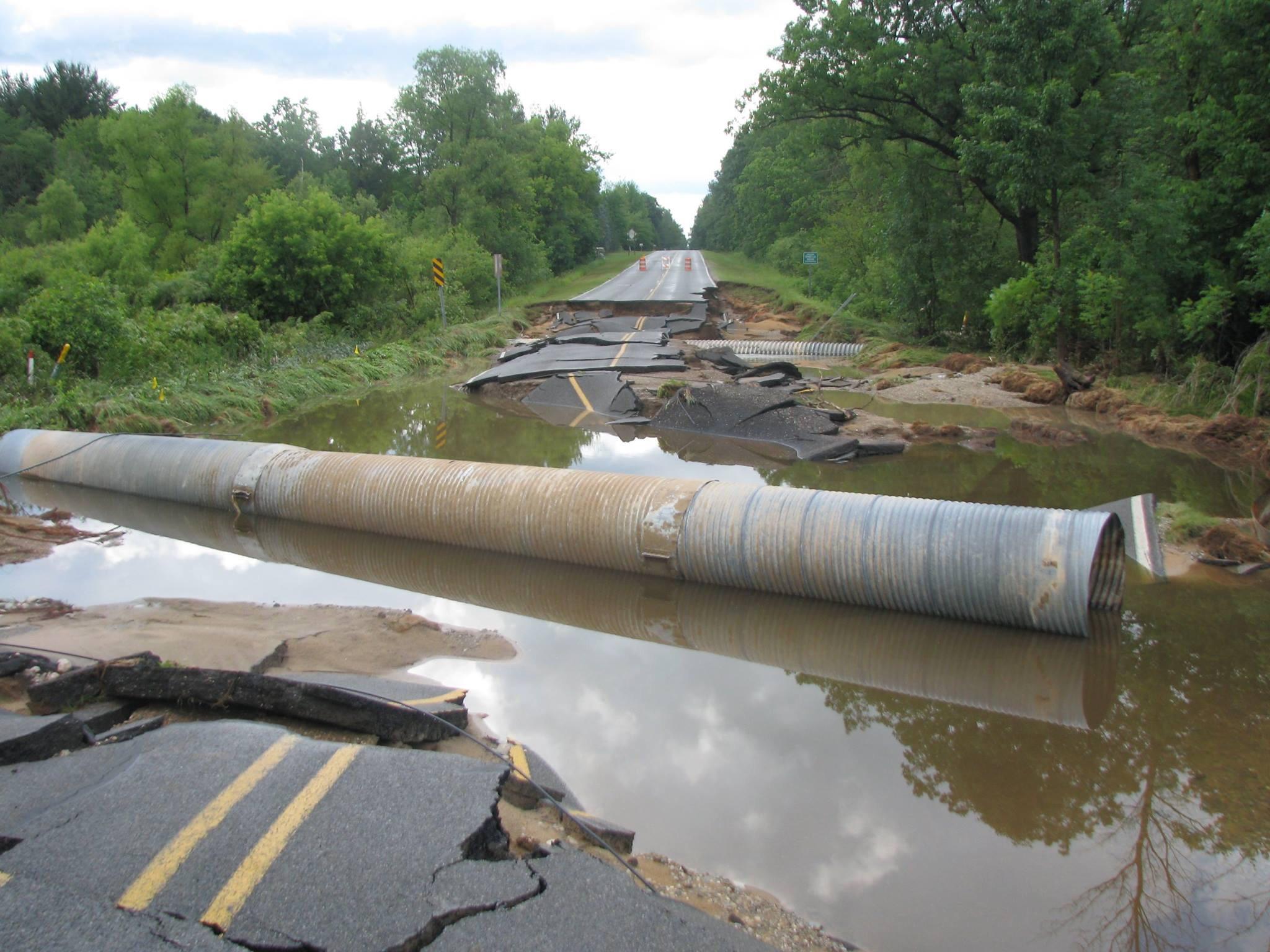
When a driveway crossing starts washing out or water backs up over the road during a storm, the instinct is to blame the pipe size. Sometimes that is exactly the problem. But a culvert can fail just as badly from a poor installation as from being undersized, and the two problems look nearly identical from the surface.
Replacing a correctly sized pipe will not fix a grade or bedding issue. Re-bedding a pipe that is genuinely too small for the watershed will not stop the flooding. Getting the diagnosis right is what determines whether the fix holds.
This is a common situation on rural and semi-rural properties across Eastern Jackson County and the Kansas City metro, especially on clay-heavy ground where runoff is fast, flow peaks quickly, and drainage crossings take a hard hit during summer storm events.
Two Ways Culverts Fail and Why the Distinction Matters
Culvert failures fall into two categories.
The first is a capacity problem. The pipe is physically too small to pass the volume of water the watershed sends through it during a real storm event. Water backs up, finds another path, and starts eroding around the ends or overtopping the road.
The second is an installation problem. The pipe may be the right size, but it was set at the wrong grade, bedded in the wrong material, left without proper end protection, or backfilled in a way that allowed settlement. Any of those conditions will cause a culvert to underperform or fail outright.
The symptoms can look nearly identical. The difference shows up when you look at how and when the failure happens.
Symptom | Points to Undersized Pipe | Points to Bad Installation |
|---|---|---|
Water backs up on inlet side during storms | Yes, consistently | Sometimes, if pipe is silted or misaligned |
Erosion cuts around pipe ends, not at outlet | Strong indicator | Less common |
Pipe runs completely full in moderate rain | Yes | Only if sediment has reduced capacity |
Problem developed gradually over 1-3 years | Rarely | Very common |
Visible pipe settlement or misalignment | No | Yes |
Sediment buildup inside the pipe barrel | No | Yes, from improper bedding |
Signs Your Culvert Is Undersized
A capacity-limited culvert tells on itself during storm events. Watch for:
Water pooling and spreading on the inlet side rather than flowing through
Erosion cutting around the pipe ends, meaning water looking for a path the pipe cannot provide
The pipe running completely full during storms that are not unusually heavy
Repeated washouts that return every storm season despite patching
A culvert running at 100% capacity during a moderate rain event has no buffer for heavier flows. Add a larger storm and it fails.
The Watershed Math Most Installers Skip
Culvert sizing is not a rule-of-thumb exercise. A correctly sized pipe accounts for the drainage area feeding the crossing, the channel slope, and the runoff characteristics of the surrounding ground.
Kansas City's expansive clay soils have a high runoff coefficient. Water does not absorb. It sheds. On a clay-heavy watershed, flow peaks faster and higher than it would on more permeable ground. A pipe sized by eyeball, or by matching the existing ditch width rather than calculating what the watershed actually produces, will routinely fail in a real storm.
That is why culverts on rural Jackson County properties get replaced more than once. The original pipe was not necessarily cheap or defective. It was undersized for the hydrology of the site.
Signs the Installation Is the Problem
Installation failures tend to develop over time rather than appearing immediately. A culvert that performed adequately for a few years before starting to back up or wash out is more likely an installation failure than a sizing problem, especially if the drainage area has not changed.
The most common installation failures:
Pipe settled out of grade. Culverts need a consistent slope to move water through. When pipe is bedded in native clay instead of compacted crushed stone, the bedding shifts and settles unevenly. Low spots form, sediment collects, and the effective flow capacity drops. A pipe that is half-silted is functioning at a fraction of its rated diameter.
End conditions not protected. Without proper end protection such as headwalls, flared end sections, or rip-rap at the outlet, water scours around the pipe ends, undermines the bedding, and starts pulling the pipe out of alignment.
Joints separated or pipe crushed. Pipe backfilled without proper compaction in lifts can settle unevenly or get crushed under load. Separated joints allow soil infiltration, which accelerates sediment buildup and further undermines the structure.
Inlet misaligned with the channel. If the pipe was not set to intercept the natural channel flow, a portion of the flow bypasses the inlet entirely and erodes around the structure.
What Proper Culvert Installation Actually Looks Like
For reference, a correctly installed culvert is set on a prepared trench bottom with crushed stone bedding extending to the pipe springline. Grade is set to promote flow without causing excessive outlet scour, typically a minimum of 0.5% slope, adjusted for channel conditions and pipe material. Backfill goes in as compacted lifts of suitable material, not bulk-pushed in a single pass. End conditions are protected from the start.
Freeze-thaw cycles add another variable specific to the Kansas City area. Poorly bedded pipe is vulnerable to frost heave, which is ground movement through the winter that shifts pipe grade and opens joints. A culvert that was marginal going into fall can be visibly settled by spring.
When You Need a New Culvert vs. When Installation Is the Fix
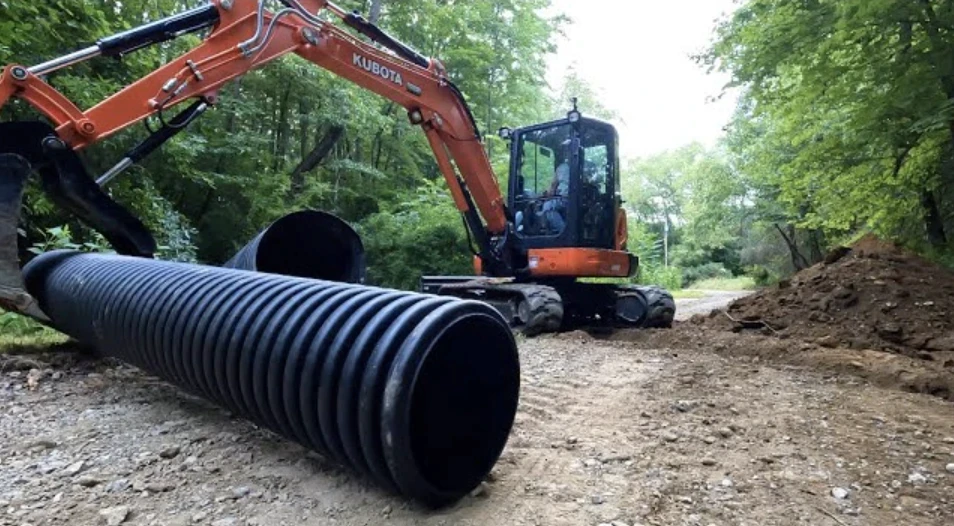
If the pipe is undersized, it has to come out. There is no repair that adds capacity to a pipe that is too small. The replacement needs to be sized correctly for the watershed, not just matched to the diameter of the pipe it is replacing.
If the pipe is the right size but the installation failed, the answer depends on the extent of the damage. Isolated inlet or outlet erosion can sometimes be addressed without a full replacement. But a pipe that has settled out of grade, has separated joints, or has lost its bedding typically has to come out to be properly re-bedded and re-graded.
Patchwork repairs on a compromised installation tend to produce a second failure within a few seasons. A culvert that gets replaced with the same size pipe, set the same way, on the same watershed, will fail the same way.
When to Call a Contractor
Some culvert problems are straightforward enough to assess on your own. If you can clearly see a pipe that is crushed, fully silted, or has washed completely free of its bedding, the issue is obvious. But in most cases, the root cause is not visible from the surface, and an incorrect diagnosis means spending money on the wrong fix.
It makes sense to bring in a contractor when:
The culvert has failed more than once and you do not know why
You are not sure whether the original pipe was sized correctly for the watershed
The failure is affecting a roadway, commercial drive, or shared access point where a second failure has real consequences
You are planning a new crossing and want it sized and installed correctly the first time
A contractor experienced in culvert installation and replacement can assess the watershed, evaluate the existing pipe and bedding conditions, and tell you whether you are looking at a sizing problem, an installation problem, or both, before any work begins.
If you are in the Kansas City metro or Eastern Jackson County area, ICON Grading and Construction handles CMP, RCP, and HDPE culvert work and can help you get it right. Contact us to request a quote today.
Frequently Asked Questions
How do I know if my culvert is too small?
The clearest sign is water backing up and spreading on the inlet side during storms rather than flowing through the pipe. If water is finding a path around the ends of the culvert, eroding the inlet banks, or overtopping the road during moderate rain, the pipe is likely too small for the drainage area it serves. A culvert that consistently runs completely full in normal rain events has no buffer for heavier flows.
What causes a culvert to fail even when it is the right size?
Most culvert failures on correctly sized pipe come down to poor bedding that settles and shifts pipe grade, unprotected end conditions that allow scour and undermining, or backfill compacted improperly that leads to settlement or crushing. In the Kansas City area, freeze-thaw cycles compound the problem. Frost heave in poorly bedded pipe can shift grade and open joints over a single winter. Any of these conditions will cause a culvert to underperform regardless of diameter.
Can I repair a failing culvert or does it need to be replaced?
Isolated inlet or outlet erosion can sometimes be corrected without pulling the pipe. But a culvert that has settled out of grade, has separated joints, or has lost its bedding almost always has to come out, since partial repairs on a compromised installation tend to fail again within a few seasons. If the pipe is undersized, it has to be replaced with a correctly sized pipe installed with proper bedding, grade, and end protection.
What size culvert do I need for my driveway or property?
Culvert sizing is based on the drainage area feeding the crossing, the channel slope, and the runoff characteristics of the surrounding ground. In Kansas City, expansive clay soils produce fast, high-volume runoff that makes sizing by rule of thumb unreliable. A common mistake is matching the replacement pipe to the old diameter, which repeats the original undersizing. Proper sizing requires a watershed calculation, and a contractor familiar with local drainage conditions can determine the right size before work starts.
How long does culvert installation take and what does it typically cost?
A standard residential culvert replacement on a driveway crossing can typically be completed in a single day, assuming the site is accessible and the existing channel does not require major regrading. Cost varies based on pipe size, material (CMP, RCP, or HDPE), site conditions, and end protection required. For a deeper breakdown of what goes into culvert replacement costs, see Culvert Replacement 101: Costs, Permits & Common Mistakes.
More Articles

Load More