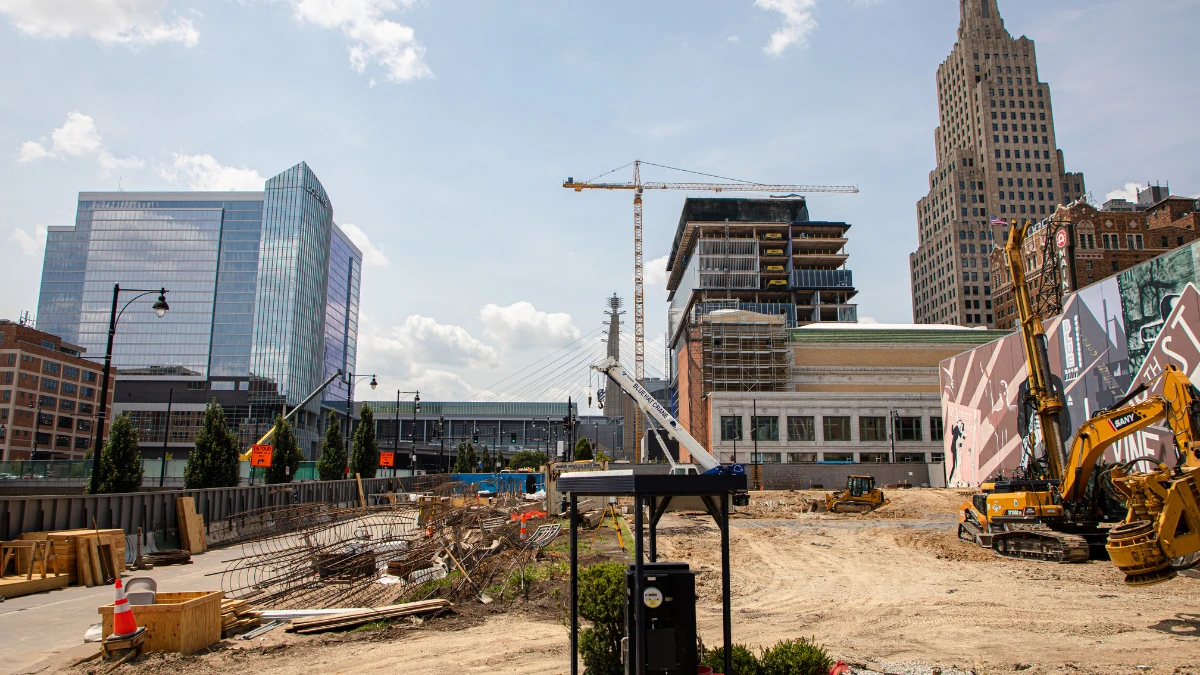
Most operators do not choose a market the way developers or investors do. You take the work that is in front of you, build a reputation, and the region either sustains you or it does not. In the Kansas City metro, the conditions that matter most to an excavation operator's career have been stacking up in the right direction for years.
This is not a boom market driven by a single sector. It is a wide, layered mix of residential excavation, commercial site work, and a multi-year public infrastructure pipeline. That mix matters. When one type of work slows, the others carry the load. For a skilled operator looking at where to plant roots, that is the kind of stability that compounds over time.
The KC Metro Keeps Excavation Operators Busy Year-Round
Single-sector construction markets are fragile for operators. When industrial construction cools or a residential cycle peaks, work dries up fast. The Kansas City metro does not fit that pattern. Residential development, commercial and industrial buildout, and public infrastructure investment all run in parallel here and rarely slow in unison.
That breadth translates directly to what an operator actually runs across in a full season:
Building pad grading and foundation excavation on residential lots in Blue Springs and Grain Valley
Commercial site prep and mass grading for industrial development along the metro's freight corridors
Drainage corrections and utility trenching tied to public and municipal projects
Roadway prep on state and county road programs that run year after year
The variety is not incidental. It is a structural feature of how this region grows. For an operator building a career here, it means the skill set compounds. Working across residential and commercial site work in Kansas City's clay soils builds a depth of field judgment that does not come from running the same class of project in a more forgiving market.
Residential Growth in Eastern Jackson County Is Not Slowing Down
Lee's Summit is one of the fastest-growing cities in Missouri. Its population has grown from under 9,000 in 1960 to more than 107,000 today, and residential demand has not plateaued. In late 2025, the Lee's Summit City Council advanced a $481 million mixed-use development at Highway 50 and Highway 291, with developers targeting a spring 2026 groundbreaking. That kind of scale requires substantial site work before a single foundation gets poured.
Blue Springs and Grain Valley are active in the same corridor. The pattern across eastern Jackson County is consistent:
New subdivisions and custom home sites requiring foundations and building pads
Rural lots being developed for outbuildings, shops, and barns, with gravel driveways and access road work
Finish grading and drainage correction on established residential lots where clay soils have created yard drainage problems
Utility trenching for water, sewer, and conduit lines feeding new development
The soil conditions add a layer of complexity that filters out operators who have not worked here before. Kansas City's expansive clay is moisture-sensitive and slow-draining. A pad that looks solid in dry weather can become a liability after a rain event if it was not sequenced correctly. Operators who understand local soil behavior bring something to a residential project that cannot be replicated by someone unfamiliar with the region.
Commercial and Industrial Development Is Adding a Different Layer of Work
The Kansas City industrial market posted 8.4 million square feet of net absorption in 2025 and ranked fourth in lowest vacancy rate among the top 30 US industrial markets. That performance is backed by real projects that required real site preparation.
Recent major build-to-suit projects in the KC metro:
Project | Size | Type |
Panasonic facility | 2.35 million SF | Manufacturing / industrial |
Precision Vehicle Holdings | 850,000 SF | Manufacturing / industrial |
Amazon distribution center | 630,000 SF | Distribution / logistics |
Before any of those buildings goes up, the ground has to be prepared. Commercial site work at that scale requires operators who can hold tight grades across large areas, manage significant cut and fill volumes, and work in coordination with GCs managing compressed schedules.
Commercial grading is a different discipline than residential. The stakes on grade accuracy are higher, the tolerances are tighter, and the consequences of rework on a commercial schedule are more costly. Operators who develop that competency in a market like Kansas City carry a skill set that general contractors and developers actively look for.
The commercial buildout in the KC metro is not concentrated in a single submarket. Johnson County, the Northland, eastern Jackson County, and the urban core are all generating work. That geographic spread means operators are not dependent on a single corridor staying active.
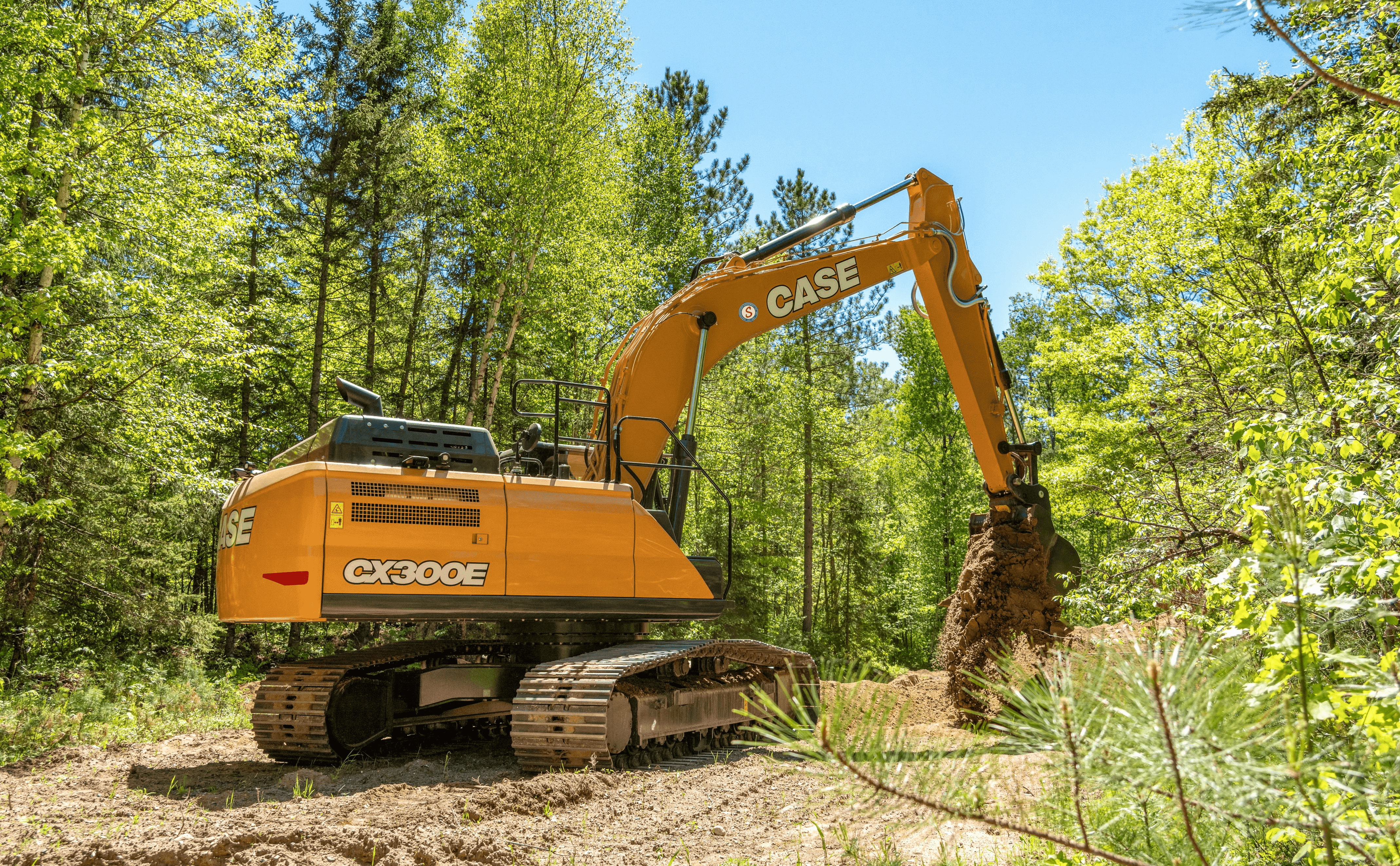
The Infrastructure Pipeline in the KC Metro Is Years Deep
Public infrastructure investment in the Kansas City metro is not a short-cycle program. Two numbers tell the story:
$237 million: The Improve I-70 KC design-build project running through spring 2028, replacing 15 bridges and reconstructing segments of the interstate through Jackson County
$43.8 million: Johnson County's 2026 commitment alone to roadway and stormwater improvements across 13 cities
Roadway prep and subgrade work at that scale requires operators who can manage grade on high-visibility public projects where precision and schedule compliance are non-negotiable. Johnson County's Stormwater Management Program has invested more than $780 million in infrastructure since inception, with annual programs continuing to generate drainage-related excavation and grading work.
For an operator, infrastructure work fills the calendar alongside residential and commercial jobs.
The project types are steady and technically demanding:
Culvert installation and replacement on county roads and private crossings
Roadway prep and base work on state and municipal programs
Drainage grading tied to stormwater and runoff control projects
Utility trenching for water, sewer, and conduit work on public programs
Infrastructure work also tends to generate repeat relationships with the municipalities and utilities that issue the work. That consistency matters for operators who want to build a long-term presence in a market rather than chasing the next boom.
Why Local Knowledge Compounds Career Value Here
Soil conditions in the Kansas City metro are not incidental to how excavation work gets done. The region sits on expansive clay that swells with moisture and contracts as it dries.
Subgrade that passes a proof-roll one day can fail after a rain event if the underlying plasticity index is high and drainage is not managed correctly. Freeze-thaw cycles in Missouri winters stress culverts, roadway edges, and compacted pads in predictable but consequential ways.
Operators who have worked in this soil for years build a practical library that does not show up on a resume:
Knowing when a pad needs undercutting rather than stabilization
Reading a site for where water will pond before the drainage plan is implemented
Recognizing the difference between firm clay and a zone that will shear under load
That judgment separates operators who generate callbacks and rework from operators who finish clean.
The technology layer matters here too. Contractors running GPS machine control systems on precision grading work need operators who can interpret what the display is telling them and adjust accordingly. In Kansas City clay, where small grade deviations can affect drainage and compaction outcomes significantly, the combination of local soil knowledge and GPS-guided precision is more valuable than either capability alone.
That combination takes time to develop. Operators who commit to building their careers in this market accumulate a depth of local knowledge that becomes increasingly difficult for a contractor to replace. In a region where experienced operators are consistently in demand across residential, commercial, and infrastructure work, that scarcity has real career implications.
What This Means for an Operator Looking at the Long Game
The Kansas City construction market is not the fastest-growing metro in the country. Phoenix and Nashville post bigger headline numbers. But those markets also cycle harder, with booms followed by periods where skilled operators compete for the same shrinking pool of work.
Kansas City's growth is steadier and more diversified. Residential demand in eastern Jackson County has been sustained across multiple economic cycles. Industrial and commercial construction is supported by the metro's logistics position as a central distribution hub. Public infrastructure spending is locked into multi-year programs that do not pause with the housing market.
The practical path forward in this market is clear. Operators who develop multi-machine proficiency, build familiarity with KC clay soil conditions, and gain experience on GPS-equipped equipment position themselves for the full range of work the metro generates:
Residential site work for custom builders and developers across eastern Jackson County
Commercial grading for the GCs managing the metro's industrial and mixed-use pipeline
Infrastructure work tied to the region's sustained roadway prep and culvert replacement programs
ICON Grading & Construction has been doing this work in eastern Jackson County and across the KC metro since 2015. The crew runs Topcon GPS machine control on precision grading jobs and handles the full range of site work, from foundations and building pad grading to utility installation, drainage grading, and land clearing. If you are an experienced operator looking for a position in a market that rewards local knowledge and technical depth, visit the our careers page for opportunities.
Frequently Asked Questions
Is the Kansas City construction market stable for excavation operators long-term?
The KC metro draws on residential, commercial, and public infrastructure work simultaneously, which means operators are not exposed to single-sector slowdowns. Multi-year infrastructure programs and sustained residential demand in eastern Jackson County have kept the market consistently active across economic cycles.
What types of excavation work are most common for operators in the KC metro?
Residential foundation and building pad work, commercial site prep and mass grading, utility trenching, drainage corrections, roadway prep, and culvert installation and replacement. Operators working for full-service crews handle all of these across a season rather than specializing in one project type.
Why does soil knowledge matter so much for excavation operators in Kansas City?
Kansas City sits on expansive, high-plasticity clay that swells with moisture and contracts as it dries. Operators who understand how to sequence cuts, manage drainage, and recognize subgrade instability before it becomes rework save contractors significant time and material cost. That judgment is built through experience in this specific soil, not transferred from markets with different geology.
Does GPS machine control experience matter for excavation operators in Kansas City?
It is increasingly important, particularly on commercial grading jobs where grade tolerances are tight and schedules are compressed. Operators who can work with GPS-guided systems alongside traditional grade-reading skills are more competitive for the higher-value commercial and infrastructure work the KC market generates.
How does eastern Jackson County fit into the KC metro construction market?
Eastern Jackson County is one of the most consistently active residential growth corridors in Missouri. Cities like Lee's Summit, Blue Springs, and Grain Valley have generated sustained demand for site work across multiple development cycles. The corridor is also close enough to the urban core that operators based here can reach commercial and infrastructure projects across the broader metro without extended travel.
More Articles


Load More